

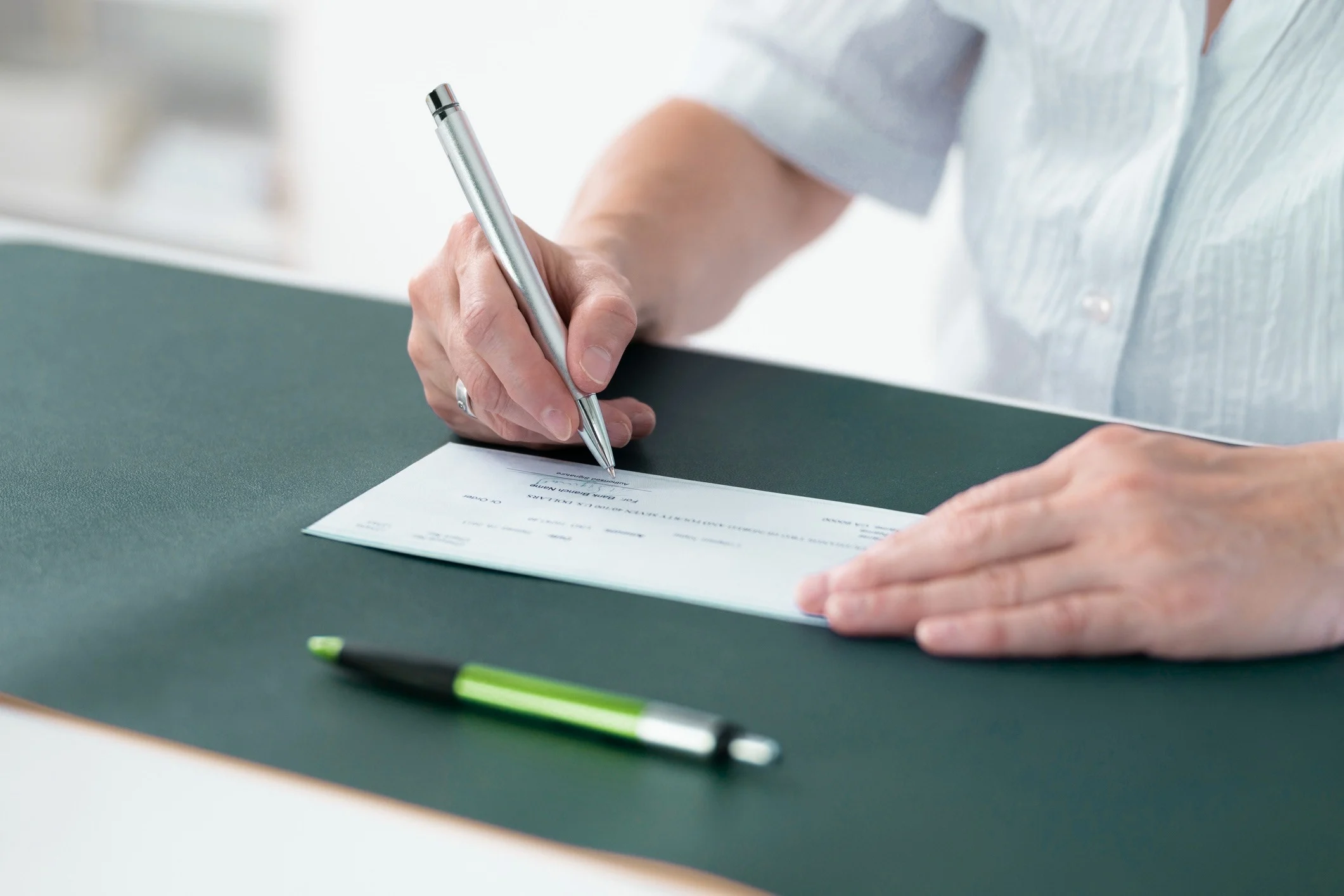
How do I correctly fill out a check?
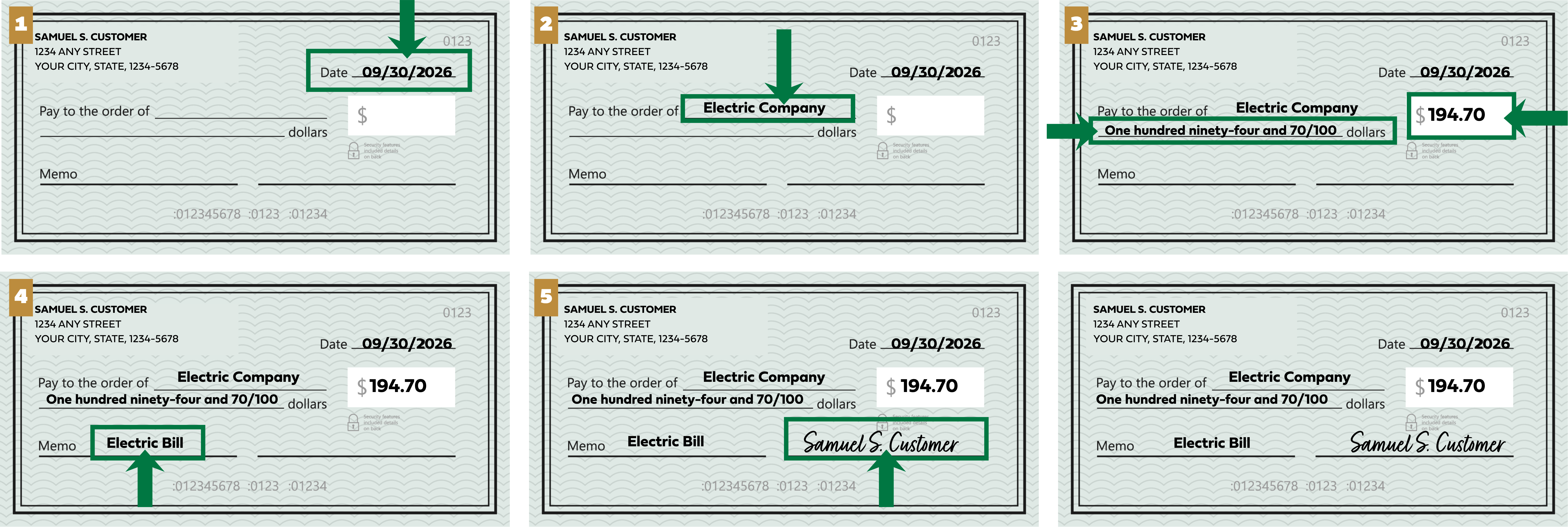
Filling out a check is straightforward when you follow these steps:
- Start by writing the current date in the top right corner.
- Place the recipient's name on the “Pay to the order of” line.
- Write the payment amount in numbers in the box provided and spell out the same amount in words on the line below.
- For accuracy, start writing as close to the left margin as possible and include cents as fractions (e.g., “Thirty and 50/100”).
- Use the memo line to note the purpose of the payment, such as “Electric Bill” or “Gift.”
- Finally, sign your name on the bottom right to authorize the transaction.
How do I track and record checks?
To effectively track and record checks, start by utilizing the check register included in your checkbook. Record key details like the check number, date, payee, and payment amount. For more convenience, use digital tools like mobile banking apps or personal finance software. They help you track transactions in real time.
Regularly review your bank statements and reconcile them with your check records to identify any discrepancies. Keeping clear records also makes it easier to manage your account with confidence.
Benefits of Having and Using Checks
Checks remain a practical payment method for various situations where digital options may not be suitable. They are especially useful for paying individuals or entities that do not accept electronic transfers, such as small businesses, landlords, or local service providers.
Additionally, you can personalize them with details like your name and address, which makes them a convenient way to provide official payment without needing additional documentation. They can also provide a clear paper trail for personal or business payments.
For people who prefer not to rely solely on electronic systems, checks provide an alternative that doesn’t require internet access or electronic devices. In some cases, checks are required by certain organizations, such as government agencies, for processing payments. This makes owning a checkbook an essential tool for managing diverse financial needs.
What Should I Do If I Make a Mistake on a Check?
If you make a mistake while writing a check, it is usually best to void it. Then start with a new check instead of fixing the error. Write “VOID” clearly across the check and keep it for your records or securely destroy it. If you realize there is an error after the check has already been given to someone, contact the recipient and your bank as soon as possible to determine the best next step.
Check Security Tips
Checks contain sensitive financial information, so it is important to handle them carefully. Store unused checks in a secure location, use permanent ink, and never pre-sign blank checks. When filling one out, write close to the left edge of each field and avoid blank spaces that could be changed later. Review your account activity regularly, and if a checkbook or completed check is lost or stolen, contact your bank promptly.
Avoiding Common Mistakes
Before handing over or mailing a check, review each field for accuracy. Make sure the date is correct and easy to read; the recipient’s name is spelled correctly, and the payment amount in numbers matches the amount written in words. If you include a memo, keep it clear and concise so it is easy to understand later. Taking a final moment to review the check can help prevent delays or processing issues.
A checking account gives you a convenient way to manage everyday spending, pay bills, and write checks when you need them. Explore Maspeth Federal Savings checking account options: https://www.maspethfederal.com/personal-banking/checking